-
The Social Contract Revisited: Tax Fairness and the Tax Mix
David G. Duff
This brief considers the concept of tax justice or fairness in relation to each of these broad goals: the collection of revenues to finance public expenditures, the regulation of social and economic behaviour, and the distribution of economic resources. With respect to the collection of revenue for public expenditures, it argues that traditional principles of taxation according to benefits received and ability to pay provide useful criteria to assess the justice or fairness of taxes for this purpose. Regarding the regulation of social and economic behaviour, principles of tax fairness necessarily assume a different character, related to the justice of the regulatory goal, the presence of a rational relationship between the tax or tax incentive and the regulatory goal, and the distributional effects produced by the tax or incentive. Finally, it contends, where a tax is designed to affect the distribution of economic resources, principles of tax fairness dissolve into broader considerations of distributive justice which determine the manner in which economic resources are fairly distributed and the respective roles of taxes and transfer payments to achieve this distributive goal. Together, the brief concludes, these principles support a mix of taxes, including benefit taxes and user fees, a broad-based consumption tax like a value-added tax, excise taxes on specific goods and services, as well as progressive income and wealth transfer taxes.
[From Tax fairness and the tax mix - ORA - Oxford University Research Archive]
-
Inaction and Non-Compliance: British Columbia's Approach to Women's Inequality: Submission of the BC CEDAW Group to the United Nations Committee on the Elimination of Discrimination Against Women on the Occasion of the Committee's Review of Canada's 6th and 7th Reports
Aileen Smith, Margot Young, and Shelagh Day
-
A Property Law Reader: Cases, Questions and Commentary, 2nd ed.
Bruce Ziff, Jeremy de Beer, Douglas C. Harris, and Margaret E. McCallum
-
Tax Avoidance in Canada After Canada Trustco and Mathew
David G. Duff and Harry Erlichman
In October 2005, the Supreme Court of Canada released its much-anticipated decisions in The Queen v. Canada Trustco Mortgage Co. and Mathew v. The Queen—the first cases in which the Court has specifically addressed the General Anti-Avoidance Rule (GAAR) in section 245 of the Canadian Income Tax Act. Since then, the Tax Court of Canada has released several decisions in which the GAAR has been considered and applied.
The articles in this volume reflect on these decisions and the role of a general anti-avoidance rule more generally by reviewing the decisions themselves, considering other tax avoidance cases in Canada and other countries, and considering the structure and amendment of a GAAR as a matter of legislative policy. By addressing various aspects of tax avoidance jurisprudence as well as the design and amendment of the GAAR, the book makes a positive contribution toward the interpretation and application of this provision.
Tax Avoidance in Canada after Canada Trustco and Mathew will appeal to legal theorists, economists, tax advisors, tax litigators, and judges.
[From Tax Avoidance in Canada after Canada Trustco and Mathew - Irwin Law]
-

Faster, Higher, Stronger: Preventing Human Trafficking at the 2010 Olympics
Benjamin Perrin and The Future Group
-

Poverty: Rights, Social Citizenship, and Legal Activism
Margot Young, Susan B. Boyd, Gwen Brodsky, and Shelagh Day
Recent years have seen the retrenchment of Canadian social programs and the restructuring of the welfare state along neo-liberal lines. Social programs at both the federal and the provincial levels have been cut back, eliminated, or recast in exclusionary and punitive forms. Poverty: Rights, Social Citizenship, and Legal Activism responds to these changes by examining the ideas and practices of human rights, citizenship, legislation, and institution-building that are crucial to addressing poverty in this country.
The essays in this volume investigate current trends in social, political, and legal anti-poverty activism. They challenge prevailing assumptions about the role of governments and the methods of accountability in the field of social and economic justice. Through their analysis of rights advocacy and the interconnectedness of law and politics, the contributors also demonstrate that the fight for social and economic justice is vibrant and of critical importance.
-
Aboriginality and Governance: A Multidisciplinary Perspective
Gordon Christie
The discussion of Aboriginal governance is a highly contested site which brings together history, political theory (both Indigenous and Western), and legal theory, as well as culture, identity and notions of nationhood and citizenship. Gordon Christie has assembled a set of articles from a group of Quebécois academics who lend their perspectives and ideas to this key Canadian issue. The articles show the immense complexity of Aboriginal governance as it develops within an Aboriginal modernity consisting of ideas from all three foundational pillars: English, French and Aboriginal. This is an essential collection that illustrates the key governance debates and themes, both within Aboriginal and Canadian political communities. - David Newhouse, Chair, Indigenous Studies, Trent University
-
Crime and Security
Benjamin J. Goold and Lucia Zedner
The pursuit of security is now central to the development of public policy and a driving force behind the spread of private policing. Just as new theoretical frameworks are needed to deal with the increasing tendency of crime control policies to focus on risk reduction, new forms of governance are also required to deal with the rapid growth of the private security industry. This volume brings together a wide range of contributions from leading scholars in the field and includes international and comparative perspectives on the challenges posed by the rise of the 'security society'.
[from https://www.routledge.com/Crime-and-Security/Goold-Zedner/p/book/9780754626008]
-
International Law Chiefly as Interpreted and Applied in Canada, 7th ed.
Hugh M. Kindred, Phillip M. Saunders, Jutta Brunnée, Robert J. Currie, Ted L. McDorman, Armand L.C. deMestral, Karin Mickelson, René Provost, Linda C. Reif, Stephen J. Toope, and Sharon A. Williams
-
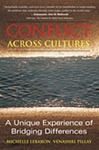
Conflict Across Cultures: A Unique Experience of Bridging Differences
Michelle Lebaron and Venashri Pillay
Cultural differences among members of any group-be it a multinational business team or an international family-are frequently the source of misunderstanding and can lead to conflict. With powerful techniques for resolving or at least reducing conflicts, scholars and teachers from around the globe demystify the intricate and important relationship between conflict and culture.
Stories, which are at the heart of the book, come from a wide variety of groups and locations, and they give sound counsel for all kinds of settings: business, law, government, non-governmental agencies, schools, communities and families. Conflict across Cultures is written by a new generation of conflict resolution scholars from four parts of the world: Canada, South Africa, Japan and the US. They describe processes and help build the skills necessary for successful conflict resolution. Here is a new framework for understanding others-a map for making progress through differences that can otherwise overwhelm us. Conflict across Cultures offers hope in countering the view that differences must divide us.[From Conflict Across Cultures by Michelle LeBaron | Hachette UK]
-
Falling Short of the Mark: An International Study on the Treatment of Victims of Human Trafficking
Benjamin Perrin and The Future Group
Printing is not supported at the primary Gallery Thumbnail page. Please first navigate to a specific Image before printing.