




























-

Just Rights: The Canadian Charter in Troubled Times
Joel Bakan
In Just Rights, distinguished legal scholar Joel Bakan argues that our courts are obliged by the Canadian Charter to protect social justice and equality as core democratic and constitutional values, especially as they are increasingly vulnerable to neglect and attack in times of surging right-wing populism and neo-liberal priorities.
Canadian courts have made the claim that Charter rights should be interpreted broadly and generously to reflect and reinforce the fundamental rights of the Canadian body politic; however, they typically stop short of meaningfully implementing this crucial ambition. Bakan contends that it is time for courts to move beyond this practice of inaction. Just Rights builds upon existing principles of Charter law to demonstrate that Canadian courts can and should recognize how Charter rights oblige governments to act positively in aid of fairness and inclusion, and that they further necessitate private actors to respect them.
Unique in Canadian constitutional scholarship, this book offers a clear framework for judicial protection and promotion of social justice under the Charter, with evidence as to how it grows from existing principles, respects real-world limits on judicial power, and confronts the ideological forces of illiberalism and neo-liberalism that threaten equality and democracy today.
[from https://utppublishing.com/doi/book/10.3138/9781487562274]
-
Tort Law: Cases and Commentaries, 2026 ed
Samuel Beswick
The first edition of this casebook was published in July 2021. Updates were published in July 2022, August 2023, May 2024 and July 2025. New editions will be published annually each July.
Preface
The law of obligations concerns the legal rights and duties owed between people. Three primary categories make up the common law of obligations: tort, contract, and unjust enrichment. This casebook provides an introduction to tort law: the law that recognises and responds to civil wrongdoing. The material is arranged in two main parts. Following a brief introduction (§1), the first main part addresses intentional, dignitary and dishonesty torts as well as corresponding defences and remedies (§2-§10). The focus pivots with a consideration of the overarching theories and goals of tort law (§11) and no-fault compensation schemes as an alternative to the tort system (§12). The second main part addresses negligence, nuisance, strict liability, and further defences and remedial doctrines (§13-§23). The casebook concludes with two chapters that explore the place of common law tort within our broader legal systems (§24-§25).
This casebook was compiled and edited by Associate Professor Samuel Beswick of the University of British Columbia Peter A. Allard School of Law. Maddison Zapach (J.D. 2023) assisted on the first edition published in July 2021. Gabriella Pasolli (J.D. 2025), Lillian Callender (J.D. 2025), Joey He (J.D. 2026) and Malik Dhami (J.D. 2026) assisted on the 2024 edition.
We gratefully acknowledge the influence on our approach to this subject of Professor Joost Blom QC of the Allard School of Law, Professor John C.P. Goldberg of Harvard Law School, and Associate Professor Rosemary Tobin of the University of Auckland Faculty of Law. Thank you also to colleagues who have recommended helpful improvements over the years, particularly Dr. Brian Bird. The support of Open UBC and the UBC Teaching and Learning Enhancement Fund is also gratefully acknowledged.
Themes
Themes explored within this casebook include:
- Tort law is grounded in community standards and values.
- Rights of action in private law afford plaintiffs the right to sue.
- Our common law constitution assumes equality of all (including public officials) under law.
- The common law develops incrementally: precedent upon precedent.
- The common law is a dialogue taking place over time within and between jurisdictions.
Notable illustrations of these themes include the High Court of Australia’s judgment in Binsaris v. Northern Territory (§2.2.4) recognising incarcerated indigenous youths’ claims of unlawful battery by prison officers; the Supreme Court of Canada’s judgment in R v. Le (§2.4.5) addressing police racial profiling, trespass, and wrongful detention; the opinion dissenting from the Supreme Court of the United States’ denial of certiorari in Baxter v. Bracey (§6.6.8.2) concerning the US doctrine of qualified immunity from constitutional tort liability for government officers; and the Ontario Court of Appeal’s judgment in Cloud v. Canada (§19.7.1) certifying a class action of First Nations residential school survivors’ claims in negligence, battery, and assault.
While primarily focussing on Canadian case law, this casebook incorporates judgments from comparative common law jurisdictions, including Hong Kong, India, Kenya, New Zealand, and Singapore, as well as excerpts of and links to commentaries from the world’s leading tort law scholars.
Teaching and learning from this casebook
This casebook is designed to aid the teaching of tort law in common law Canadian law schools. The readings are complemented by commentary in the UBC Canadian Torts Wiki, which is hyperlinked throughout: 🌍.
The cases have been selected and curated to help build up understanding of concepts and material over a course. One way this is achieved is by returning to different portions of judgments across topics. For example, the case of Gokey v. Usher & Parsons appears across twelve cross-referenced sections addressing the topics of battery (§2.2.1), assault (§2.3.3), harassment (§3.2.5), statutory invasion of privacy (§4.2.3), trespass to land (§7.1.2), non-pecuniary damages (§9.3.4), aggravated damages (§9.4.3), punitive damages (§9.5.4), permanent injunctions (§9.9.2.1), intimidation (§10.2.1), private nuisance (§21.1.3), and legal costs (§20.8.1). The case of Lu v. Shen appears in the sections on intentional infliction of mental suffering (§3.1.6), invasion of privacy (§4.2.4), defamation (§5.1.1), harassment (§3.2.3), non-pecuniary damages (§9.3.8), and permanent injunctions (§9.9.2.4). Hill v. Hamilton-Wentworth Police Services Board appears in the sections on duty of care (§13.4.2.2), standard of care (§14.1.3.3), breach of duty (§14.2.5.3), damage (§15.2.1), and but-for causation (§16.1.3).
The casebook is designed with flexibility in mind. Each chapter is largely self-contained so that instructors can assign sections to suit their syllabi. The edited cases link back to original judgment transcripts on open-access platforms. Extracts of relevant Federal and British Columbia statutes are accompanied by lists of other provinces’ equivalent statutes.
Dinkuses (“***”) indicate where content has been edited out. To aid classroom discussion, paragraph numbering has been added to case excerpts where it was not already included in the original transcript.
To aid comprehension, each reading is followed by the editor’s Reflection questions. Students will find it helpful to review these questions before reading the case or material that they reflect on, and to read the cases in light of the commentary in the Canadian Torts Wiki 🌍. Students can find past exams, multiple-choice quizzes and guided exam answer exercises based on the casebook content by visiting https://blogs.ubc.ca/beswick/torts/.
Readers who wish to delve deeper can follow the links to podcasts 🎧, webcasts and videos 📺, photos and map pins 📍, blogs, news, articles, and books on relevant topics that are cited and hyperlinked throughout.
Instructors may subscribe to a mailing list for edition updates.
Recommended reference reading on Canadian tort law
- S. Beswick, Canadian Torts Wiki (Vancouver: UBC, 2025-).
- E. Chamberlain, S. Pitel, A. Botterell, M. McInnes, J. Neyers & Z. Sinel, Introduction to the Canadian Law of Torts (4th ed, Toronto: LexisNexis, 2020).
- E. Chamberlain, S. Pitel, A. Botterell, M. McInnes, J. Neyers & Z. Sinel, Fridman’s The Law of Torts in Canada (4th ed, Toronto: Thomson Reuters, 2020).
- A. Colangelo, Emond's Basics of Tort Law (Toronto: Emond, 2024).
- G.H.L. Fridman, Torts: A Guide for the Perplexed (Toronto: LexisNexis, 2017).
- M.H. Kerr, J. Kurtz & L.M. Olivo, Canadian Tort Law in a Nutshell (5th ed, Toronto: Thomson Reuters, 2019).
- L. Klar & C. Jefferies, Tort Law (7th ed, Toronto: Thomson Reuters, 2023).
- A. Linden, B. Feldthusen, M. Hall, E. Knutsen & H. Young, Canadian Tort Law (13th ed, Toronto: LexisNexis, 2026).
- P.H. Osborne, The Law of Torts (6th ed, Toronto: Irwin Law, 2020).
- S. Shields, Is That Legal? Torts, http://www.isthatlegal.ca/index.php?name=Tort.
Recommended reading on succeeding as a first-year law student
- B. Friedman & J.C.P. Goldberg, Open Book: The Inside Track to Law School Success (2nd ed, New York: Wolters Kluwer, 2016).
- JD Advising, “A Case Brief Template” (2020) and “An In-Depth Guide to Outlining” (2020).
- S. Tudor & S. Falconer, A Guide to Writing in Law School (Melbourne: La Trobe eBureau, 2024).
-

Taxation of Business Organizations in Canada, 3rd ed.
David G. Duff, Geoffrey Loomer, and Christopher Bantle
Combining the best features of a textbook and a casebook, this book provides a comprehensive overview of statutory provisions, judicial decisions and administrative positions governing the income taxation of partnerships and their members and of corporations and their shareholders.
-

Administrative Law: Cases and Commentaries, 2nd ed.
Alexandra Flynn
This casebook was compiled with the outstanding research support of Janie Renaud, building of the efforts of Jennifer Nguyen, who helped to create the first version. The creation of this teaching resource would not have been possible without their meticulous work.
There are many excellent Administrative Law textbooks. This one – which has the benefit of being open-source - was created to support my Administrative Law course at the Allard School of Law, which surveys the legal framework of administrative bodies. Administrative agencies are a powerful part of modern government and crucial to our daily lives. The course – and the book – provide an overview of the legal framework (rules, principles, and policy considerations) that shape the powers of these administrative decision-makers in a diverse range of areas including human rights, municipal law, First Nations governance, and professional self-governance. In particular, the book provides material on how courts review public bodies based on the principles and rules that constrain their decision-making.
I am grateful to Professor Sam Beswick for inspiring me to create this book and for being such a terrific law teacher. Thanks as well to Professors Jocelyn Stacey and Mary Liston for many insightful conversations on Administrative Law pedagogy. But the biggest thanks is for my wonderful students – I feel so grateful for the chance to steward them through this fascinating area of law.
All errors and omissions are my own.
-

The Bylaw State: Encampment Evictions and the Struggle for Public Space
Alexandra Flynn and Joe Hermer
Encampments occupied by unhoused and precariously sheltered people have proliferated in recent years in cities and towns across Canada. While right-to-housing legislation and other rights protections exist on paper, their minimal legal force has left municipalities mostly free to use policing and bylaw enforcement to remove encampments from public spaces. The result is unnoticed but devastating violence against highly vulnerable people who have no choice but to survive in public spaces.
Anti-encampment bylaws raise the question of what legal and moral rights unhoused people have to live in public space. The Bylaw State shows that bylaws are powerful municipal instruments. Far from being innocuous laws enforced by municipal workers, bylaws have quietly emerged over the last two decades as the method of governing homelessness in Canada. Case studies in Prince George and Vancouver demonstrate the extraordinary expansion of municipal bylaws and the place of courts in defending the legal rights of homeless people to take up public space. Legal scholar Alexandra Flynn and sociologist Joe Hermer explain how municipalities create an exclusionary ideal of public space through evictions and banishment, and they make a powerful case for a more inclusive approach that protects people not just spaces.
-

A Property Law Reader, 6th Edition
Douglas C. Harris, Jeremy de Beer, Tenille E. Brown, and Angela Cameron
In this sixth edition of the most widely used property law casebook in Canada, Cameron joins Harris, de Beer, and Brown in compiling and authoring an engaging collection of materials for teaching and learning property law. Retaining the basic structure of Bruce Ziff’s A Property Law Reader, this edition includes new materials on expropriation, the right to shelter, fixtures, fee simple interests, life estates, Aboriginal title, Métis rights, constructive trusts, conditional transfers, leases, mortgages, title registration, and more.
A Property Law Reader offers instructors and students a multifaceted approach to the study of property law in common law Canada. Beginning with an exploration of the meaning of property and its social and philosophical foundations, the collection examines a broad range of fundamental concepts and doctrines in the law of real, personal, and intellectual property. It situates the development of property law in Canada at the intersection of European and Indigenous legal traditions and within a broader social context that considers class, gender, race, and other dimensions of power. A Property Law Reader encourages analysis of what the law is while creating opportunities to consider what the law might become.[From https://store.thomsonreuters.ca/en-ca/products/property-law-reader-cases-questions-commentary-6th-edition-student-edt-43555550]
-

Fundamentals of the Law of Evidence: Cases and Commentaries
Nikos Harris
The emphasis of these commentaries and case excerpts is on the common law rules of evidence from a criminal law perspective. The common law is the single largest source of the rules of evidence, and many of the evidentiary rules applied in criminal proceedings are the same, or very similar, to those applied in civil and administrative cases.
Some statutory evidence rules which apply in criminal proceedings are referred to in this resource, including sections of the Criminal Code of Canada, R.S.C., 1985, c. C-46 (“Criminal Code”) and the Canada Evidence Act, R.S.C., 1985, c. C-5 (“Canada Evidence Act”). However, many sections of these statutes which relate to the rules of evidence are not discussed. Further, this publication does not discuss statutory provisions relevant to rules of evidence for other areas of law, including civil and administrative proceedings.
Statutory evidence provisions are critical because they take precedence over common law rules. For example, in a criminal trial, the common law concerning the timing for disclosure of expert evidence is replaced by the provisions in section 657.3 of the Criminal Code. While statutory evidence provisions often:
-borrow from the common law; and,
-in many instances supplement the common law rules rather than replace them,
it is critical that parties first assess whether there are any statutory provisions which are relevant to an evidentiary issue before relying on the common law.
This is an educational resource which is aimed at assisting persons in understanding basic principles of evidence. Authority for the content in the commentaries is sometimes provided in a case reference in that section, but more commonly relies on the case excerpts provided after the commentary. This resource does not address all rules of evidence, and does not provide a comprehensive analysis of those rules which are discussed. The case excerpts and cases referenced in the commentaries are intended to help understand the rules, but do not necessarily represent the current law on each issue.
-

The Long and Complex Journey From Allegation to Proof of a Crime: Cases and Commentaries
Nikos Harris
Focus of this Resource
The emphasis of these commentaries and case excerpts is on the requirements the Crown must meet in order to prove a criminal case against an accused. The focus of this resource is on offences which are contained in the Criminal Code of Canada, R.S.C., 1985, c. C-46 (“Criminal Code”). This is an educational resource aimed at assisting persons in understanding the basic thresholds the Crown must meet to prove a criminal offence. Authority for the content in the commentaries is sometimes provided in case references in that section, but more commonly relies on the case excerpts provided after the commentary. This resource does not address all rules and steps in the Crown’s proof of an offence, and does not provide a comprehensive analysis of those issues of proof which are discussed. The case excerpts and cases referenced in the commentaries are intended to provide an educational overview of the core requirements for proving an offence, but do not necessarily represent the current law on each requirement, or cover all requirements.
Defences
This resource does not include defences that can be raised by an accused. These include defences which apply after the Crown has proven all the required elements of the offence (for example, self-defence, provocation, necessity, duress), defences which prevent the Crown from being able to prove an element of the offence (for example, mistake of fact, consent, intoxication), or defences which may put an accused outside the scope of criminal responsibility (for example NCRMD, automatism). Analysis of defences is equally critical to proof of guilt. Certain defences can result in an accused being fully acquitted (for example, self-defence), only guilty of an included offence (for example, provocation, advanced intoxication), or acquitted but potentially subject to liberty restrictions (for example, NCRMD, automatism). All potential defences must be assessed in order to determine whether an accused can be convicted of an offence.
Two excellent open source educational resources, which include analysis of many defences and other critical aspects of criminal proceedings, are The Criminal Law Ebook, Brent Anderson, Joven Narwal and Tony Paisana (eds.), Canadian Legal Information Institute, 2022 CanLIIDocs 3273, and Benjamin Perrin et al, Criminal Law: Canadian Law, Indigenous Laws & Critical Perspectives, Canadian Legal Information Institute, 2nd ed (2025), 2023 CanLIIDocs 316.
Admissibility of Evidence
This resource does not include an analysis of the admissibility of evidence in criminal proceedings, such as character evidence, hearsay evidence, expert testimony, evidence subject to exclusion under the Charter, and common law rules concerning the admissibility of statements. The admissibility of evidence is a critical issue in any criminal proceeding, and the exclusion of evidence can make it more difficult, or impossible, for the Crown to prove its case. For an open access educational resource on the rules of evidence, with a particular emphasis on criminal proceedings, see the author’s CANLII publication, The Fundamentals of the Law of Evidence: Cases and Commentaries, Canadian Legal Information Institute, 2026 CanLIIDocs 24.
-

The Law of Estoppels, Election, and Waiver by Abandonment, 3rd ed.
Bruce MacDougall
This civil litigation book pulls together various aspects of estoppel and the related doctrines of election and waiver by abandonment into one place, saving readers valuable research time, while educating them on the rules and principles of these doctrines in a clear and organized manner.
-

AI & Policing: Research Report on the Governance and Use of Artificial Intelligence by Police in Canada
Benjamin Perrin
Examines the growing use of AI by police, the benefits and risks these technologies present, and opportunities for stronger governance across the following areas:
- Police uses of AI: What types of AI technologies are currently in use, or have been used, by Canadian police forces, and for what specific purposes? What evidence is there of their benefits and risks?
- Police self-regulation: How effectively are police agencies in Canada governing their own use of AI technologies?
- Governance approaches: How can international and Canadian AI governance initiatives help guide responsible and trustworthy AI adoption in Canadian policing?
We relied on published research and knowledge from a wide range of public sources, as well as on roundtables with stakeholders. These roundtables were especially important, given the rapidly evolving nature of this topic. Across three cities, 40 participants contributed candidly under the Chatham House Rule, enabling the free sharing of ideas and experiences. This included representatives from human rights and law reform bodies, privacy commissioners, police services and oversight agencies, academics and researchers, civil society and advocacy organizations, criminal defence lawyers and legislators.
While this report focuses on published research and open-source materials on this topic, a second report describing the research roundtable discussions was published in January 2026.
-

AI & Policing: Knowledge Synthesis Report on the Governance & Use of Artificial Intelligence by Police in Canada
Benjamin Perrin, Geoffrey Liew, and Isabelle Sweeney
Police services across Canada are using, or exploring, a broad range of artificial intelligence (AI) technologies, including facial recognition, location-based predictive policing, automated licence plate readers, AI-assisted police reports, object recognition and video analytics, social media monitoring, gunshot detection, probabilistic genotyping, and data mining.
While promising productivity and public safety benefits, these tools also raise various concerns and risks. Canada currently lacks AI-specific legislation and regulations governing these new technologies, or even a statement of principles on the governance and use of AI by police.
-

IA et maintien de l'ordre : rapport de synthèse des connaissances sur la gouvernance et l'utilisation de l'intelligence artificielle par la police au Canada
Benjamin Perrin, Geoffrey Liew, and Isabelle Sweeney
Les services de police de partout au Canada utilisent, ou explorent, un large éventail de technologies d'intelligence artificielle (IA), y compris la reconnaissance faciale, le maintien de l'ordre prédictif basé sur la localisation, les lecteurs de plaques d'immatriculation automatisés, les rapports de police assistés par IA, la reconnaissance d'objets et l'analyse vidéo, la surveillance des médias sociaux, la détection de coups de feu, le génotypage probabiliste et l'exploration de données.
Bien que promettant des avantages en matière de productivité et de sécurité publique, ces outils soulèvent également diverses préoccupations et risques. Le Canada manque actuellement de mesures législatives et de réglementations spécifiques à l'IA régissant ces nouvelles technologies, n'ayant pas même une déclaration de principes sur la gouvernance et l'utilisation de l'IA par la police.
-

Frustration of Contract
Bruce MacDougall
Frustration of Contract is a comprehensive treatment of the law of frustration in Canada and is the first book on this subject matter. Frustration is perhaps the strongest legal intervention in a contract bringing it to a termination when an unexpected catastrophic event makes the contract radically different from that to which the parties agreed.
Frustration of Contract examines what circumstances lead to frustration (and which do not) and discusses the consequences of frustration. It also examines the use of force majeure clauses that obviate the need for the doctrine of frustration.
[From https://store.lexisnexis.com/en-ca/frustration-of-contract.html]
-
Halsbury's Laws of Canada: Personal Property and Secured Transactions (2025 Reissue)
Bruce MacDougall
The law relating to personal property has been of central importance to lawyers in all fields of practice, since well before the King's Bench in 1722 famously proclaimed the principle of "finders, keepers". That is never more true than today, with the personal property security regimes in each jurisdiction providing comprehensive rules to govern the rights of creditors and debtors when personal property is used as collateral to secure the payment of a debt.
This invaluable volume by Bruce MacDougall delivers a national, organized summary of the legislation and case law relevant to the common law field of personal property law and to the creation, perfection and enforcement of security in personal property. Designed for legal professionals who do not specialize in issues of personal property security, this accessible volume comprehensively deals with the key aspects of secured transactions under legislation in Canada's common law jurisdictions.
-

Artificial Intelligence & Criminal Justice: Cases and Commentary
Benjamin Perrin
When I was given the chance to develop a seminar this year at UBC’s Peter A. Allard School of Law, I jumped at the opportunity to develop something new and engaging. After brainstorming ideas with students, it quickly became evident that there was substantial interest and enthusiasm for a seminar on the growing integration of artificial intelligence and the criminal justice system.
Embarking on this journey has been a steep learning curve for me as my students and I worked together to shape the course along with input from generative AI tools like ChatGPT, Gemini and Perplexity, along with open-source materials from the Canadian Legal Information Institute and the Creative Commons search portal.
Delving into the case law in Canada and the U.S., reading the critical commentary, listening to podcasts and webinars, and playing around with the latest AI tools has been a lot of fun, but also made me realize how crucial it is at this point in time to have a focussed critical exploration of the benefits and risks of AI in the criminal justice context.
I hope that this open access casebook will be a valuable resource for students, instructors, legal practitioners and the public, offering insights into how AI is already influencing various aspects of the criminal justice lifecycle – including criminality and victimization, access to justice, policing, lawyering, adjudication, and corrections. If you’re interested in a quick overview of topics covered in this casebook, you can download the companion: Artificial Intelligence & Criminal Justice: A Primer (2024).
-

Intellectual Property Futures: Exploring the Global Landscape of IP Law and Policy
Graham Reynolds, Alexandra Mogyoros, and Teshager W. Dagne
-
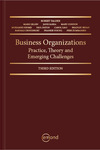
Business Organizations: Practice, Theory and Emerging Challenges, 3rd Edition
Robert Yalden, Mark Gillen, Janis P. Sarra, Mary Condon, Mohamed F. Khimji, Paul D. Paton, Carol Liao, Bradley Bryan, Barnali Choudhury, Frankie Young, and Peer Zumbansen
Business Organizations: Practice, Theory and Emerging Challenges, 3rd Edition is more than just a comprehensive guide to the fundamentals of business structures, including partnerships and corporations. It highlights diverse perspectives on the objectives of business organizations, the roles and responsibilities of their officers and directors, and the functions of these organizations in Canadian society. This approach strives to promote a deep understanding of business organizations and of the ways in which legal and policy decisions impact their function.
This thoroughly updated and reorganized edition introduces an entirely new chapter on the principles of agency, along with a fresh examination of Indigenous business structures, including commentary on the challenges of imposing organizational structures conceived outside indigenous communities to enterprises operating within them. The casebook features expert insights from three new authors: Frankie Young, Peer Zumbansen, and Barnali Choudhury.
Drawing on the perspectives of leading Canadian business scholars, this casebook is designed to be an accessible classroom and research resource. It is a must-have addition to the faculty, firm, or private library of anyone interested in the various dimensions of the law of business organizations.
[From Business Organizations: Practice, Theory and Emerging Challenges, 3rd Edition ]
-
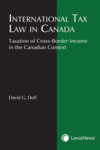
International Tax Law in Canada: Taxation of Cross-Border Income in the Canadian Context
David G. Duff
This book provides a comprehensive explanation of international tax law in the Canadian context, considering domestic rules, treaty provisions, judicial decisions and administrative guidance that governs the taxation of non-residents on income from Canadian sources and the taxation of Canadian residents on income from foreign sources.
-

Sustainable Development, International Law, and a Turn to African Legal Cosmologies
Godwin Eli Kwadzo Dzah
This original book analyses and reimagines the concept of sustainable development in international law from a non-Western legal perspective. Built upon the intersection of law, politics, and history in the context of Africa, its peoples and their experiences, customary law and other legal cosmologies, this ground-breaking study applies a critical legal analysis to Africa's interaction with conceptualising and operationalising sustainable development. It proposes a turn to non-Western legal normativity as the foundational principle for reimagining sustainable development in international law. It highlights eco-legal philosophies and principles in remaking sustainable development where ecological integrity assumes a central focus in the reimagined conceptualisation and operationalisation of sustainable development. While this pioneering book highlights Africa as its analytical pivot, its arguments and proposals are useful beyond Africa. Connecting global discourses on nature, the environment, rights and development, Godwin Eli Kwadzo Dzah illuminates our current thinking on sustainable development in international law.
[From https://doi.org/10.1017]
-
Administrative Law: Cases and Commentaries
Alexandra Flynn
This casebook was compiled by Alexandra Flynn, Associate Professor, Allard School of Law, University of British Columbia. Jennifer Nguyen provided outstanding research support – indeed, this book would not have been possible without Jennifer’s excellent suggestions and tremendous work.
Administrative agencies are a powerful part of modern government and crucial to our daily lives. There are many excellent Administrative Law textbooks. This one – which has the benefit of being open-source - was created to support my Administrative Law course at Allard School of Law, which surveys the legal framework of administrative bodies. The course – and the book – provide an overview of the legal framework (rules, principles, and policy considerations) that shape the powers of these administrative decision-makers in a diverse range of areas including human rights, municipal law, First Nations governance, and professional self-governance. In particular, the book provides material on how courts review public bodies based on the principles and rules that constrain their decision-making.
I am especially grateful to Professor Sam Beswick for inspiring me to create this book (and for being such a fabulous colleague). I learn so much from him. Thanks as well to Professors Jocelyn Stacey and Mary Liston for many insightful conversations on Administrative Law pedagogy. But the biggest thanks is for my wonderful students – I feel so grateful for the chance to steward you through this fascinating area of law.
All errors and omissions are my own.
-
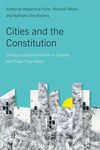
Cities and the Constitution: Giving Local Governments in Canada the Power They Need
Alexandra Flynn
Empowering Canadian cities with the legal authority to manage their own obligations is a crucial democratic project.
-
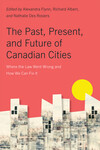
The Past, Present, and Future of Canadian Cities: Where the Law Went Wrong and How We Can Fix It
Alexandra Flynn, Richard Albert, and Nathalie Des Rosiers
In 1861, just a few years before Confederation, 84 per cent of Canadians lived in rural areas; today, it’s less than 20 per cent. Our municipal governments are asked to do more for their citizens than ever before, yet they must confront myriad challenges – from the public health pandemic to the housing crisis – without the tools they need. They have no constitutional protection from jurisdictional overstepping by provincial governments and no assurance that they will be able to complete any effort they undertake.
The Past, Present, and Future of Canadian Cities explores the historical functions of municipalities, their current ability to tackle major problems, and what the future holds for shifting legal and political powers. This volume examines how pre-Confederation cities came to have their current constitutional and legislative forms; how current local governments make decisions within existing legal parameters, highlighting Indigenous-municipal relationships and emergency management; and, finally, looks to the world to investigate future innovation in municipal governance.
The Past, Present, and Future of Canadian Cities makes the case that constitutional concepts must be repurposed to support the transition from nation-building to city-building in a global context.[From Past, Present, and Future of Canadian Cities, The | McGill-Queen’s University Press]
-
Halsbury's Laws of Canada – Estoppel (2024 Reissue)
Bruce MacDougall
The doctrine of estoppel is used to hold parties to their promises or agreements, whether formal or informal. Estoppel applies to many different fields of law, both public and private. This authoritative title provides an extensive overview of the various types of estoppel, including estoppel by deed, estoppel by convention, estoppel by representation, promissory estoppel and proprietary estoppel. The title describes and analyzes each individual doctrine, summarizes its development, and sets out its current application in case law from a variety of jurisdictions.
[From Halsbury's Laws of Canada]
-
The Power & Limits of Private Law
Marcus Moore and Samuel Beswick
This collection of legal essays draws upon the third Canadian Law of Obligations conference held in June 2022 in Vancouver, British Columbia.
-
Trusts in Common-Law Canada, 4th ed.
Dennis Pavlich
Written for both novices and veterans, this book introduces readers to the foundations of trust law and provides an up-to-date exposition and analysis of the legislation and case law that have shaped the Canadian trust landscape.
[From Trusts in Common-Law Canada, 4th Edition | LexisNexis Canada]
Printing is not supported at the primary Gallery Thumbnail page. Please first navigate to a specific Image before printing.