-
Falling Short of the Mark: An International Study on the Treatment of Victims of Human Trafficking
Benjamin Perrin and The Future Group
-
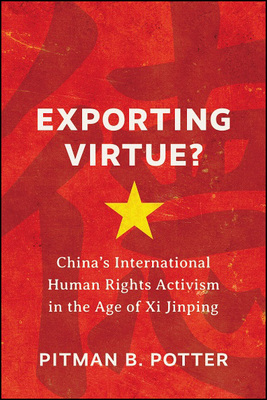
Law and Economic Development in China Mainland and Taiwan
Pitman B. Potter
Recent policy changes in Mainland China and Taiwan have supported increased reliance on law in management of the economy and society. Increased complexity in socioeconomic and political relations is seen to require norms of formality and objectivity to replace informal and subjective relational norms associated with tradition. This in turn can create increased demands for the institutional and procedural rigor that legal reforms promise. But legal reform is not only about formalizing the rules for socioeconomic and political behavior - local conditions and local values of morality and civility provide important context.
[From Law and Economic Development in China Mainland and Taiwan by Pitman Potter :: SSRN]
-
Environmental Law for Sustainability
Benjamin J. Richardson and Stepan Wood
This volume of new essays presents critical new scholarship on law for sustainable development. Its contributors provide international and comparative perspectives on the current state of environmental law and its future directions. Aimed at both students and scholars in law and other social sciences, it goes beyond conventional descriptions of environmental law and policy to a theoretical and interdisciplinary analysis of the role of law in sustainable development. Starting from the premise that ecological sustainability requires environmental law systems to be sensitive to a wide array of institutional, social and economic issues and to emerging forms of environmental governance beyond conventional legal regulation, the book explores: future directions in command regulation; changing forms of public administration; risk assessment and precautionary regulation; ecological justice; public participation in environmental decision-making; indigenous peoples and the environment; industry self-regulation; economic instruments; sustainable finance; the state of international environmental law; and environmental law in developing countries.
-
Women in BC: Human Rights Under Attack: Submission of The Poverty And Human Rights Centre to the United Nations Committee on Economic, Social and Cultural Rights on the Occasion of the Consideration of Canada's Fourth and Fifth Reports on the Implementation of the International Covenant on Economic, Social and Cultural Rights
Margot Young, Shelagh Day, and Social Rights Accountability Project
-
Human Rights Denied: Single Mothers on Social Assistance in British Columbia
Gwen Brodsky, Melina Buckley, Shelagh Day, and Margot Young
Human Rights Denied documents the very diffi cult conditions in which single mothers are raising their children in British Columbia today. It is a call for the Government of British Columbia to abandon its current policies - because they are a cruel failure.
It is also a tribute to the courage, love and hard work of single mothers.
They are valiant; they deserve better.
-
Humanitarianism, Identity and Nation: Migration Laws of Australia and Canada
Catherine Dauvergne
Refugees are on the move around the globe. Prosperous nations are rapidly adjusting their laws to crack down on the so-called “undeserving.” Australia and Canada have each sought international reputations as humanitarian do-gooders, especially in the area of refugee admissions.
Humanitarianism, Identity, and Nation traces the connections between the nation-building tradition of immigration and the challenge of admitting people who do not reflect the national interest of the twenty-first century. Catherine Dauvergne argues that in the absence of the justice standard for admitting newcomers, liberal nations instead share a humanitarian consensus about letting in needy outsiders. This consensus constrains and shapes migration law and policy. In a detailed consideration of how refugees and others in need are admitted to Australia and Canada, she links humanitarianism and national identity to explain the current shape of the law.
If the problems of immigration policy were all about economics, future directions would be easy to map. If rights could trump sovereignty, refugee admission would be straightforward. But migration politics has never been simple. Humanitarianism, Identity, and Nation is a welcome antidote to economic critiques of immigration, and a thoughtful contribution to rights talk. It is a must-read for everyone interested in transforming migration laws to meet the needs of the twenty-first century.
-

Women's Civil and Political Rights in Canada 2005: Submission of The Canadian Feminist Alliance for International Action to the United Nations Human Rights Committee on the Occasion of its Review of Canada's 5th Report on Compliance with the International Covenant on Civil and Political Rights
Shelagh Day, Margot Young, Lisa Phillips, and Feminist Alliance for International Action (FAFIA)
-
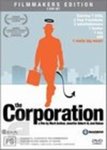
The Corporation: The Pathological Pursuit of Profit and Power
Joel Bakan
As incisive as Eric Schlosser's bestselling Fast Food Nation, as rigorous as Joseph E. Stiglitz's Globalization and Its Discontents, and as scathing as Michael Moore's Stupid White Men, Joel Bakan's new book is a brilliantly argued account of the corporation's pathological pursuit of profit and power. An eminent law professor and legal theorist, Bakan contends that the corporation is created by law to function much like a psychopathic personality whose destructive behavior, if left unchecked, leads to scandal and ruin.
In the most revolutionary assessment of the corporation as a legal and economic institution since Peter Drucker's early works, Bakan backs his premise with the following claims:
• The corporation's legally defined mandate is to pursue relentlessly and without exception its own economic self-interest, regardless of the harmful consequences it might cause to others—a concept endorsed by no less a luminary than the Nobel Prize-winning economist Milton Friedman. • The corporation's unbridled self-interest victimizes individuals, society, and, when it goes awry, even shareholders and can cause corporations to self-destruct, as recent Wall Street scandals reveal. • While corporate social responsibility in some instances does much good, it is often merely a token gesture, serving to mask the corporation's true character. • Governments have abdicated much of their control over the corporation, despite its flawed character, by freeing it from legal constraints through deregulation and by granting it ever greater authority over society through privatization.
Despite the structural failings found in the corporation, Bakan believes change is possible and outlines a far-reaching program of concrete, pragmatic, and realistic reforms through legal regulation and democratic control.
Backed by extensive research, The Corporation draws on in-depth interviews with such wide-ranging figures as CEO Hank McKinnell of Pfizer, Nobel Prize-winner Milton Friedman, business guru Peter Drucker, and critic Noam Chomsky of MIT.
[From Corporation by Joel Bakan | Penguin Random House Canada]
-
CCTV and Policing: Public Area Surveillance and Police Practices in Britain
Benjamin J. Goold
This book is the first major published work to present a comprehensive assessment of the impact of CCTV on the police in Britain. Drawing extensively upon empirical research, the volume examines how the police in Britain first became involved in public area surveillance, and how they have since attempted to use CCTV technology to prevent, respond to, and investigate crime. In addition, the volume also provides a detailed analysis of the legality of CCTV surveillance in light of recent changes to the Data Protection Act and the incorporation of the European Convention on Human Rights. Challenging many existing accounts of the relationship between the police and new surveillance technologies, the book breaks new ground in policing and surveillance theory, and argues that it is time for a major reassessment of both our understanding of how the police respond to technological change, and of the role played by such technologies in our society.
[From https://doi.org/10.1093/acprof:oso/9780199265145.001.0001]
-
Contrasting Prisoners' Rights: A Comparative Examination of England and Germany
Liora Lazarus
This volume aims to provoke reflection on the English conception and treatment of prisoners' rights, through juxtaposition with the conception of prisoners' rights in Germany. First, the German and English understandings of prisoners' legal status are examined; secondly these understandings are placed against the background of broader social, political, and legal factors; and thirdly, the methodological problems of comparative law are addressed. English and German approaches to prisoners' rights present illuminating contrasts. In England, despite significant judicial activity in the development of a jurisprudence of prisoners' rights, protection of prisoners' rights remains partial and equivocal. Many aspects of prison life are left within the realm of executive discretion. This equivocal commitment to rights in England is juxtaposed with Germany's highly articulated rights culture and its ambitious system of prisoners' rights protection under the Prison Act 1976. The German Prison Act sets out foundational principles of prison administration, affords prisoners positive rights, defines the limitations of prisoners' constitutional rights, and provides prisoners with recourse to a Prison Court. Moreover, these rights and principles have been developed and refined in a substantial body of prison law jurisprudence over the last thirty years.
[From Contrasting Prisoners' Rights: A Comparative Examination of England and Germany | Oxford Academic]
-
Holding the Line: Borders in a Global World
Heather N. Nicol and Ian Townsend-Gault
This volume contains contributions from twenty-four scholarsconcerning the significance and implications of the world’sborderlands in economic, political, and socio-cultural contexts.Together these essays explore the changing role of borders in a globalworld. Are borders increasingly irrelevant under conditions ofglobalization, or can a case be made to demonstrate their continuingimportance at various levels of spatial activity?
Situating itself within a growing border literature, Holding theLine argues that contemporary borders facilitate parallelprocesses of globalization and localization of political activity. Assuch, the essays adopt a holistic approach to understanding the impactof boundaries on both society and space. They demonstrate that anyattempt to create a methodological and conceptual framework for theunderstanding of boundaries must be concerned with the process ofbounding, rather than simply the means through which the physical linesof separation are delimited and demarcated. This approach renders thenotion of a "borderless world" highly problematic, becausethe latter ignores the important and ongoing relationship between thefunctional role of borders in the bounding process, and the symbolicrole of borders as imagined social, political, and economicconstructions embedded within a geographical text.
The changing characteristics of political boundaries during an eraof globalization has become a great focus of interdisciplinary study,and this book will appeal to scholars of political geography, borderstudies, and international relations.
-
The Third World and International Order: Law, Politics and Globalization
Antony Anghie, Bhupinder Chimni, Karin Mickelson, and Obiora C Okafor
This collection of essays explores different dimensions of the relationship between the third world and international law. The topics covered include third world approaches to international law, non-state actors and developing countries, feminism and the third world, foreign investment, resistance and international law, and territorial disputes and native peoples. It is a further contribution to the work done by scholars intent on elaborating what might be termed Third World Approaches to International Law (TWAIL). This initiative seeks to continue and further develop the important work that has been done over many decades, particularly by scholars and jurists from the third world, to construct an international law which is sensitive to the needs of third world peoples. This body of scholarship has attempted to extend and expand the concerns and materials of international law. The essays in this volume are animated by these same motives at a time when unprecedented issues confront third world peoples, particularly since the contemporary international system appears to be disempowering third world peoples, intensifying inequality between the North and the South, and indeed, importantly, within the North and the South.
TWAIL scholars attempt to look afresh at the history of colonial international law, engage previous trends in third world scholarship in international law, take cognizance of the dramatic changes which have characterized the body of international law in the last few decades from the perspective of third world peoples, record their resistance to unjust and oppressive international laws, and advance new approaches that address their needs and concerns. These are the broad themes and concerns which animate this collection of essays. -
Canadian Constitutional Law, 3rd ed.
Joel Bakan, Patrick Macklem, John Borrows, Richard Moon, Sujit Choudhry, R.C.B. Risk, Robin Elliot, Kent Roach, Jean-François Gaudreault-DesBiens, Carol Rogerson, Donna Greschner, Bruce Ryder, Patricia Hughes, David Schneiderman, Jean Leclair, and Lorraine Weinrib
-
British Columbia Moves Backwards on Women's Equality: Submission of the B.C. CEDAW Group to the United Nations Committee on the Elimination of Discrimination Against Women on the Occasion of the Committee’s Review of Canada's 5th Report
B.C. CEDAW Group, Shelagh Day, Margot Young, Patricia Cochran, Kelly MacDonald, and Sharon McIvor
British Columbia Moves Backwards on Women’s Equality, prepared by the Poverty and Human Rights Project for 12 women’s and anti-poverty organizations in British Columbia, submitted to the United Nations Committee on the Elimination of Discrimination against Women on the occasion of the review of Canada’s 5th report on its compliance with the Convention on the Elimination of All Forms of Discrimination against Women.
[From https://povertyandhumanrights.org/2003/01/b-c-cedaw-report-british-columbia-moves-backwards-on-women%EF%BF%BDs-equality-prepared-by-the-poverty-and-human-rights-project-for-12-womens-and-anti-poverty-organizations-in-british-columbia-ja/amp/]
Printing is not supported at the primary Gallery Thumbnail page. Please first navigate to a specific Image before printing.