-

China and the Rules-Based International Order: Globalized Populism and Crisis Response
Pitman B. Potter
China and the Rules-Based International Order uses the lens of populism to analyze China’s recent crisis responses.
Why does China diverge from other powers on the world stage? Under the leadership of Xi Jinping, China’s political rhetoric has turned outward in a strong resistance to existing rules. Drawing parallels with domestic populism movements that are anti-elitist and grievance-fuelled, Pitman B. Potter theorizes that contemporary Chinese conduct can be described as “globalized populism” against the Western-dominated international order.
Potter uses the framework of populism to explore China’s responses to three global crises of our time: the COVID-19 pandemic, climate change, and involuntary migration. Debates about the origins of and responsibility for COVID-19 after its emergence in China prompted the country to express an antagonistic populism in its relations with the international public health policy system. By contrast, the domestic challenges of climate change have provoked greater Chinese involvement in the international climate policy system, an example of participatory populism. Finally, China’s response to migration has been hesitant and cautious, articulated in passive populism against the prevailing international migration policy.
This carefully reasoned analysis of China’s crisis responses supports a better understanding of a country with increasing prominence in the world and suggests practical policies to improve relations between China and the international system.
A meticulously argued study, China and the Rules-Based International Order will reveal numerous insights not only to scholars and students of China studies, but also to policy professionals working on China-related issues
[From https://www.ubcpress.ca/china-and-the-rules-based-international-order]
-
Business Organizations: Practice, Theory and Emerging Challenges, 3rd Edition
Robert Yalden, Mark Gillen, Janis P. Sarra, Mary Condon, Mohamed F. Khimji, Paul D. Paton, Carol Liao, Bradley Bryan, Barnali Choudhury, Frankie Young, and Peer Zumbansen
Business Organizations: Practice, Theory and Emerging Challenges, 3rd Edition is more than just a comprehensive guide to the fundamentals of business structures, including partnerships and corporations. It highlights diverse perspectives on the objectives of business organizations, the roles and responsibilities of their officers and directors, and the functions of these organizations in Canadian society. This approach strives to promote a deep understanding of business organizations and of the ways in which legal and policy decisions impact their function.
This thoroughly updated and reorganized edition introduces an entirely new chapter on the principles of agency, along with a fresh examination of Indigenous business structures, including commentary on the challenges of imposing organizational structures conceived outside indigenous communities to enterprises operating within them. The casebook features expert insights from three new authors: Frankie Young, Peer Zumbansen, and Barnali Choudhury.
Drawing on the perspectives of leading Canadian business scholars, this casebook is designed to be an accessible classroom and research resource. It is a must-have addition to the faculty, firm, or private library of anyone interested in the various dimensions of the law of business organizations.
[From Business Organizations: Practice, Theory and Emerging Challenges, 3rd Edition ]
-
Economic Torts in Canada, 3rd ed
Peter Burns and Joost Blom
The book provides an overview of the concepts and theories of economic torts and the parameters of the current law and looks at economic loss from all possible causes of action.
-
Financial Institutions in Distress: Recovery, Resolution, and Recognition
Ronald B. Davis, Stephan Madaus, Monica Marcucci, Irit Mevorach, Riz Mokal, Barbara Romaine, Janis P. Sarra, and Ignacio Tirado
-
Reflections on Connecting Canada’s Climate Policy Network
Fenner Stewart and Janis P. Sarra
This book represents an initial step to mapping the layers of Canadian climate policy activities across government, industry, and civil society. Its guiding presumption is that such mapping will help align efforts to decarbonize. A consensus point among all authors is that new alliances need to be forged, and old ones need to be refreshed, strengthened, and broadened. Such allyship will prove essential to supporting efforts to combat climate change, galvanizing and prioritizing support for the global transition to carbon-neutrality.
When climate change actors can find ways to better coordinate, they will build the sort of networked institutional thickness that can effect directed change while standing as a formidable fail-safe to policy backslide when tough choices require commitment. Our book offers direction toward such institutional thickness within climate governance, a thickness that can ensure that meaningful decarbonization occurs. It does so by offering a glimpse into how policy actors, including self-empowered individuals, can protect tomorrow from the perils of the present.
[From Reflections on Connecting Canada's Climate Policy Network - Canada Climate Law Initiative]
-
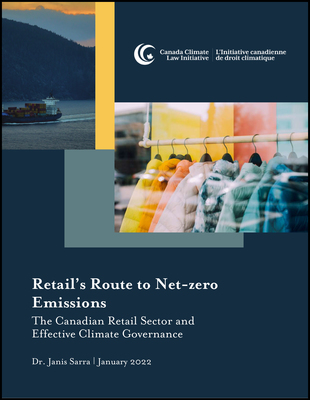
Retail’s Route to Net-Zero Emissions: The Canadian Retail Sector and Effective Climate Governance
Janis P. Sarra
Authored by Dr. Janis Sarra, Professor of Law at the University of British Columbia and Principal Co-Investigator of the CCLI, the guide provides an accessible summary of the legal duties of retail directors and officers in the transition to a net-zero economy. It offers examples of best practices in climate governance as well as a checklist of issues the board should be considering in its governance and risk oversight and strategic planning.
-
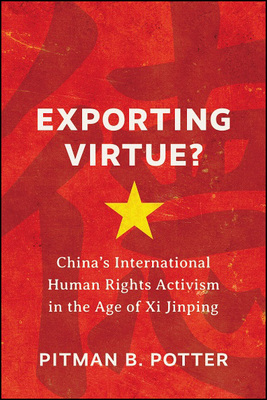
Exporting Virtue?: China's International Human Rights Activism in the Age of Xi Jinping
Pitman B. Potter
Under the leadership of President Xi Jinping, China has attempted to change international human rights values to accommodate its own interests, causing increasing friction with international standards of law and governance.
Exporting Virtue? examines human rights as an example of China’s international assertiveness and considers the implications of internationalizing PRC human rights policy and practice. Pitman B. Potter suggests that in the absence of clear and enforceable global human rights standards, China uses its international influence to promote its human rights policies on global governance, freedom of expression, trade and investment policy, and labour and environmental regulation. The PRC’s efforts to export its human rights principles and standards exemplify the rise of authoritarian governance models internationally. Couched in terms of virtue but manifested as authoritarianism, China’s international human rights activism invites scholars and policy makers around the world to engage critically with the issue.
Drawing on both Chinese- and English-language sources, Exporting Virtue? investigates the challenges that China’s human rights orthodoxy poses to international norms and institutions, offering normative and institutional analysis and providing suggestions for policy response.
Students and scholars of China, international law, human rights, comparative law and politics, and international trade and investment policy will find this an indispensable work, as will policy communities focussed on China’s international relations and business practices.
-
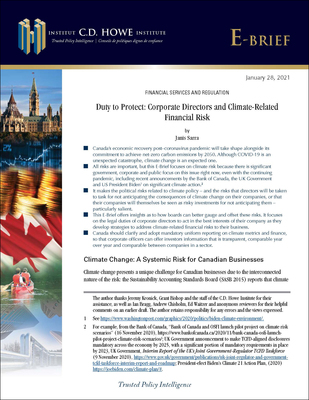
Duty to Protect: Corporate Directors and Climate-Related Financial Risk
Janis P. Sarra
Climate Risk Reporting Needs Clarity to Succeed
- Amid growing calls from regulators, financial standard organizations and institutional investors, Canadian corporations face pressure to adopt transparent climate-risk reporting. But first, they need greater clarity on the metrics and standards involved.
- Author Janis Sarra recommends that Canada clarify and adopt mandatory uniform reporting on climate metrics and finance, so that corporate officers and directors can offer investors information that is transparent, comparable year over year and comparable between companies in a sector.
- Governments can also provide more clarity through legislative reforms to further support directors in the transition to a low-carbon economy.
[From Duty to Protect: Corporate Directors and Climate-Related Financial Risk – C.D. Howe Institute]
-
Life, Health, Property, Casualty: Canadian Insurance Company Directors and Effective Climate Governance
Janis P. Sarra
The insurance sector is important because it provides the financial safety net for many Canadians suffering losses associated with climate impacts. Insurance coverage is the guarantee that policyholder losses will be indemnified; yet climate-related weather events are growing in severity and frequency. Severe weather damage in Canada caused $2.4 billion in insured losses in 2020, and over half that amount was for flooding.
The guide sets out the legal duties of directors of insurers and offers insights into best practices, including how directors of insurance companies can begin to implement effective governance, strategies, risk management, targets, and metrics aligned with the Taskforce on Climate-related Financial Disclosures (TCFD) framework. Under financial services legislation, directors have an obligation to ensure the company is managed prudently so that there is sufficient capital that the promises to insurance policyholders and to annuities beneficiaries can be met.
-
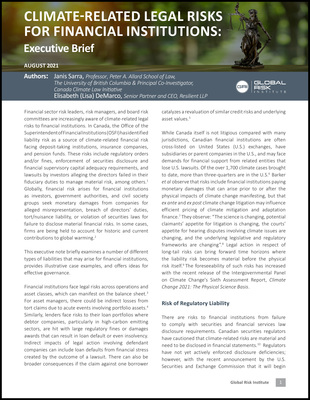
Climate-Related Legal Risks for Financial Institutions: Executive Brief
Janis P. Sarra and Elisabeth (Lisa) DeMarco
-

The 2021 Annotated Bankruptcy and Insolvency Act
Janis P. Sarra, Geoffrey B. Morawetz, and Lloyd W. Houlden
-
Directors' Duties Regarding Climate Change in Japan
Yoshihiro Yamada, Janis P. Sarra, and Masafumi Nakahigashi
Authored by Dr. Yoshihiro Yamada, Vice Dean of College of Law at the Ritsumeikan University, Dr. Janis Sarra, Professor of Law at the University of British Columbia, and Dr. Masafumi Nakahigashi, Vice-President at Nagoya University, the report outlines the three primary duties for directors of Japanese companies: duty of loyalty; duty to be compliant with all laws, regulations, and ordinances, and the company articles; and the duty of care. These duties to the corporation ground the obligation of corporate directors and officers to act in their company’s best interests by developing a plan to tackle climate change. The report also highlights how directors and their companies are impacted if they fail to fulfill these obligations.
[From Directors’ Duties Regarding Climate Change in Japan - Canada Climate Law Initiative]
-
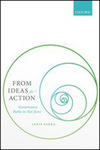
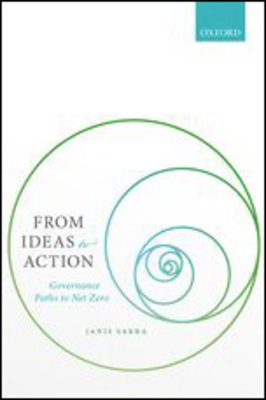
From Ideas to Action: Governance Paths to Net Zero
Janis P. Sarra
This book offers a guide, for companies, pension funds, asset managers, and other institutional investors, on how to commence the legal, governance, and financial strategies needed for effective climate mitigation and adaptation, and to help distribute the economic benefits of these actions to their stakeholders. It takes the reader from ideas to action, from first steps to a more meaningful contribution to the move towards a net zero carbon world. It can serve as a helpful guide to everyone implicated in a corporation's activities - employees, pensioners, consumers, banks and other lenders, policymakers, and community members. It offers insights into what we should be expecting, and asking, of these fiduciaries who have taken responsibility for effectively managing our savings, our retirement funds, our investments, and our tax dollars.
[From From Ideas to Action | Janis Sarra | 9780198852308 | Oxford University Press Canada]
-
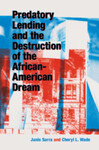
Predatory Lending and the Destruction of the African-American Dream
Janis P. Sarra and Cheryl L. Wade
Since the Great Recession of 2008, the racial wealth gap between black and white Americans has continued to widen. In Predatory Lending and the Destruction of the African-American Dream, Janis Sarra and Cheryl Wade detail the reasons for this failure by analyzing the economic exploitation of African Americans, with a focus on predatory practices in the home mortgage context. They also examine the failure of reform and litigation efforts ostensibly aimed at addressing this form of racial discrimination. This research, augmented by first-hand narratives, provides invaluable insight into the racial wealth gap by vividly illustrating the predation that targets African-American consumers and examining the intentionally obfuscating settlement terms of cases brought by the U.S. Department of Justice, states attorneys, and municipalities. The authors conclude by offering structural, systemic changes to address predatory practices. This important work should be read by anyone seeking to understand racial inequality in the United States.
-
The 2019-2020 Annotated Bankruptcy and Insolvency Act
Lloyd W. Houlden, Geoffrey B. Morawetz, and Janis P. Sarra
-
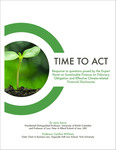
Time to Act: Response to Questions Posed by the Expert Panel on Sustainable Finance on Fiduciary Obligation and Effective Climate-Related Financial Disclosures
Janis P. Sarra and Cynthia Williams
The Expert Panel on Sustainable Finance has been commissioned by the Canadian Government to determine how best to generate sustainable finance, a significant challenge given the carbon intensity of Canada’s economy. The Expert Panel has defined sustainable finance as capital flows, risk management activities and financial processes that assimilate environmental and social factors as a means of promoting sustainable economic growth and the long-term stability of the financial system. While there are numerous strategies to be deployed to move Canada to a financially sustainable future, this report addresses two critically important issues: fiduciary obligation of corporate- and pension-fiduciaries, and national action on environmental, social and governance (“ESG”) financial disclosure, including climate-related financial risk disclosure.
Our economy is facing significant challenges and disruptions in the transition to a lower carbon world. Our view is that absent clear and innovative steps to ensure our corporations and financial institutions act to address carbon emissions and other environmental, social and governance risks and opportunities, we will be seriously prejudiced in a world that is rapidly moving towards greener and more sustainable economic activity. Our report offers a comprehensive set of recommendations on these fiduciary obligation and disclosure.
-
Micro, Small, and Medium Enterprise Insolvency: A Modular Approach
Riz Mokal, Ronald B. Davis, Alberto Mazzoni, Irit Mevorach, Barbara Romaine, Janis P. Sarra, Ignacio Tirado, and Stephan Madaus
This new book systematically examines the current process for distressed Micro, Small and Medium Enterprises (MSMEs), and proposes a different, more appropriate, "modular" approach to the treatment of such entities when faced with insolvency proceedings.
MSMEs play a vital role in virtually all global economies. They are a primary means by which entrepreneurs bring new business propositions to the market, and deliver a range of products and services to local economies. MSMEs tend to be more reliant on favourable legal and regulatory climates to survive and thrive than larger businesses, and insolvency regimes are often more tailored to these larger businesses, assuming an extensive insolvency estate of significant worth, and the presence of creditors and other concerned stakeholders to participate in and oversee the process. These assumptions and features are generally incongruous with the reality of MSMEs, for whom assets are of less value and whose stakeholders are generally more disinterested.
The modular approach proposed in this book addresses the imbalances, inconsistencies, and lack of supervision which is often apparent in treatment of insolvent MSMEs. It provides an overview of existing approaches to MSME insolvency, the place of MSMEs in the global economy, and the particular needs of MSMEs in financial distress. It then sets out the procedural framework, policy objectives, and key components of the modular approach, detailing how a choice of modules enables national policy-makers a more flexible process for resolution. It then outlines the roles, positions, and obligations of key stakeholder groups, and explains the managerial, administrative, and judicial functions of this approach. Finally, it explains how elements of the broader legal system should be aligned with, and supportive of, the optimal functioning of the modular approach.[From Micro, Small, and Medium Enterprise Insolvency | Riz Mokal | 9780198799931 | Oxford University Press Canada]
-
Local Engagement With International Economic Law and Human Rights
Ljiljana Biuković and Pitman B. Potter
Providing an analysis of global regulation and the impact of international organizations on domestic laws, this collection grew out of a central objective to explore methods of domestic engagement with international trade and human rights norms, and the inherent difficulties in establishing balanced links between these two international law regimes. The common thread of the papers in this collection is a focus on the application of socio-legal normative paradigms in building knowledge and policy support for coordinating local performance with international trade and human rights standards in ways that are mutually sustaining.
[From Local Engagement with International Economic Law and Human Rights]
-
The 2017 Annotated Bankruptcy and Insolvency Act
Lloyd W. Houlden, Geoffrey B. Morawetz, and Janis P. Sarra
-
Canadian Constitutional Law, 5th ed.
Patrick Macklem, Carol Rogerson, John Borrows, Robin Elliot, Jean-François Gaudreault-DesBiens, Donn Greschner, Jean Leclair, Ian B. Lee, Richard Moon, R.C.B. Risk, Kent Roach, Bruce B. Ryder, David Schneiderman, Lorraine E. Weinrib, Richard Albert, Hamish Stewart, and Constitutional Law Group
-
Business Organizations: Practice, Theory and Emerging Challenges, 2nd ed.
Robert Yalden, Janis P. Sarra, Paul Paton, Mark R. Gillen, Mary Condon, Carol Liao, Michael Deturbide, Mohamed Khimji, Bradley Bryan, and Gary Campo
Business Organizations: Practice, Theory and Emerging Challenges, 2nd Edition is more than just a comprehensive update to Business Organizations: Principles, Policies, and Practice. It provides a detailed discussion of the fundamentals that shape this area of law, and reviews important debates surrounding the nature of business organizations and the role they play in Canadian society. Through this approach, this casebook aims to enhance the reader’s understanding of business organizations, and the ways in which legal and policy decisions impact how they function.
In addition to substantial revisions and updates, this edition features entirely new material. Most notably, the text now includes chapters that engage emerging issues related to Indigenous peoples, which in part act as a response to the Calls to Action from the Final Report of the Truth and Reconciliation Commission of Canada. This edition also features a new chapter on social enterprises and the increased momentum of social entrepreneurship.
Drawing on the perspectives of leading Canadian business scholars and commentators, this text is designed to be an accessible classroom and research resource. It is a must-have addition to the faculty, firm, or private library of anyone interested in the various dimensions of the law of business organizations.
[From Business Organizations: Practice, Theory and Emerging Challenges, 2nd Edition | Emond Publishing]
-
Private International Law in Common Law Canada: Cases, Text and Materials, 4th ed.
Stephen G.A. Pitel, Joost Blom, Elizabeth Edinger, Geneviève Saumier, Janet Walker, and Catherine Walsh
-
Canadian Bankruptcy and Insolvency Law: Cases, Texts and Materials
Anthony Duggan, Stephanie Ben-Ishai, Thomas G.W. Telfer, Janis P. Sarra, and Roderick J. Wood
Printing is not supported at the primary Gallery Thumbnail page. Please first navigate to a specific Image before printing.